What’s a piece of conventional HR wisdom you disagree with?
That HR’s job is to be the ‘people advocate’. I think that framing has done HR more harm than good. Our job isn’t to automatically represent the employee, or the manager, or the business. It’s to help create an organisation that works. Sometimes that means challenging a manager. Sometimes it means telling an employee something they don’t want to hear. Sometimes it means questioning whether a long-standing policy or HR process adds any value at all. Good HR isn’t about picking a side. It’s about exercising judgement, understanding the wider consequences of a decision and helping the business make better ones.
What’s the biggest opportunity HR teams are currently missing?
I think the biggest opportunity is redesigning work, rather than simply introducing AI into the work we already do. There’s a lot of focus on which HR activities AI can make quicker: writing policies, producing job descriptions, summarising meetings, answering employee questions. All useful, but relatively uninteresting. The bigger question is what jobs, teams and organisations should look like when technology fundamentally changes what one person is capable of doing. If somebody can suddenly do in two hours what previously took a day, the answer cannot just be to give them five times as much work. HR should be right in the middle of questions about role design, capability, decision-making, management layers and how organisations create value. I’m not convinced enough HR teams have realised yet that this is the real opportunity.
What’s the greatest challenge facing HR right now, and why?
Remaining relevant. HR has spent years asking for a seat at the table, but having the seat and being useful once you get there are two very different things. The function is increasingly expected to understand commercial decisions, organisational design, technology, data, capability and productivity, while still being excellent at the fundamentals of people management. That means HR practitioners need to be able to think beyond the immediate HR question.
What does this decision do to the organisation? What behaviour will it create?
What are the unintended consequences? What happens six months from now? The challenge isn’t that HR has too much to do. It’s that the standard expected of good HR is becoming much higher and I think that’s a good thing.
What’s one piece of advice you’d give to someone starting out in HR today?
Learn how the business actually works. Understand how it makes money, what customers pay for, where the costs sit, what good performance looks like and what keeps the leadership team awake at night. You can learn employment law, process and policy. You absolutely need those foundations. But the people who become genuinely useful in HR are the ones who can connect those things to the commercial reality of the organisation. Don’t just learn HR. Learn the business/commercial awareness that sits alongside it.
What’s the most valuable lesson you’ve learned in your HR career?
That there is very rarely a purely ‘HR’ problem. Performance issues can actually be management problems. Engagement issues can be caused by poor organisational design. Retention problems might really be about pay, workload, leadership, career development or simply hiring the wrong people in the first place. The most useful thing you can do is resist the temptation to immediately reach for an HR solution. Understand the problem properly first. Ask what is actually causing it, what else it affects, and whether fixing the obvious symptom will create another problem somewhere else. That shift in thinking has probably influenced my approach more than anything else.
Who or what has most influenced your approach to HR leadership?
Probably not another HR leader. I’ve been much more influenced by people who think about organisations, systems, decision-making and human behaviour than by traditional HR thinking, particularly a CEO that mentored me in my early career right through to their retirement five years ago. They taught me a lot about always trying to understand how the whole system works rather than looking at one decision in isolation. If you change performance management, what behaviour does that create? If you change incentives, what gets optimised? If you restructure a team, where does accountability actually move? I think good HR leadership is largely about connecting those dots and anticipating consequences before they become problems.
ABOUT
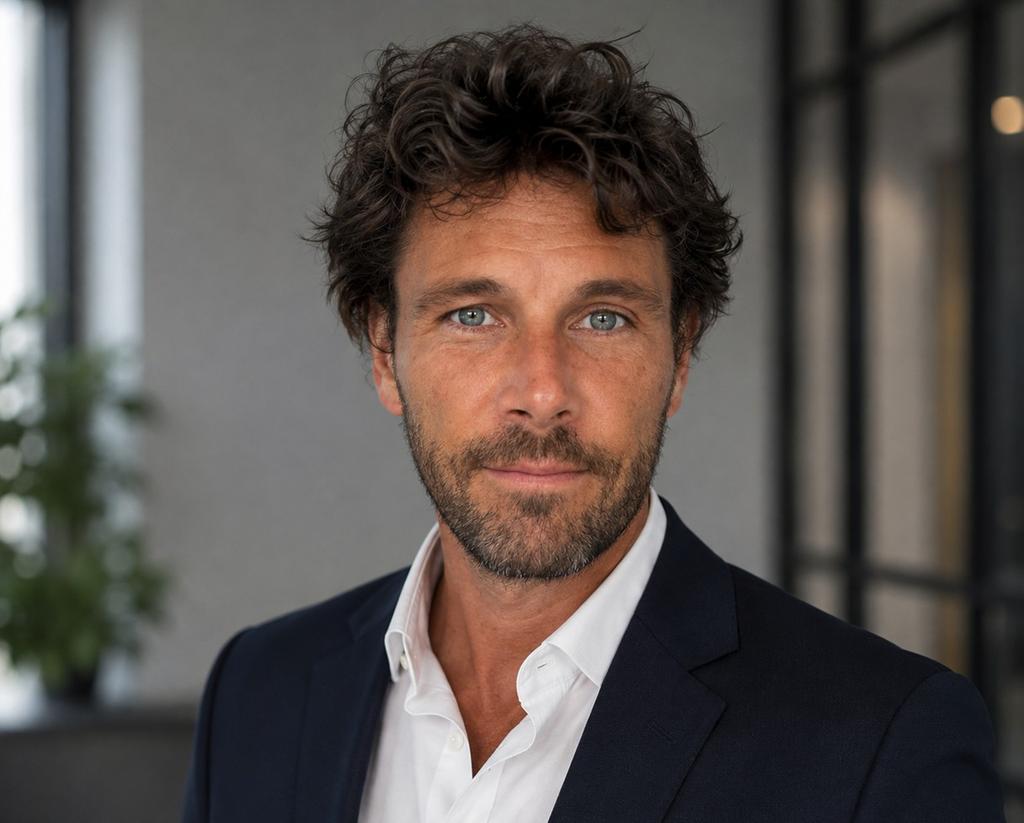
Tom Nash is a senior people and business leader with a strong bias towards action, change and tackling things that are difficult.
He is drawn to ambitious problems, unconventional ideas and environments where standing still is not really an option. Whether he is redesigning how a business operates, challenging established thinking or exploring how AI will change the way we work, his focus is always on creating something better rather than simply maintaining what already exists.
That same mindset extends beyond work. Tom is a competitive skydiver and co-founder of REIVER Performance, built around the idea of pushing limits, developing capability and remaining undefeated by the challenge in front of you.
He brings that philosophy into leadership too: think deeply, challenge intelligently, commit fully and make things happen.